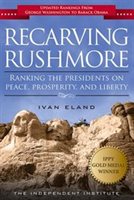
Historians and scholars have long tended to give higher rankings to presidents who served during wartime, were well spoken, or exceeded in expanding the power of the executive office. However, this new examination cuts through these longstanding biases and political rhetoric to offer a new nonpartisan system of ranking that is based purely on how well each president’s policies adhered with the founders’ original intention of limiting federal power in all its aspects. As a result, the book provides an alternative history of the United States as seen through the founders’ likely vision of subsequent presidential actions. These presidential rankings will surprise most and enlighten even acknowledged experts on the presidency.
^Ivan ElandRecarving Rushmore: Ranking the Presidents on Peace, Prosperity, and Liberty, Independent Institute. Amazon. ISBN 9781598131291 (revised Jan 2016)
Wikipedia's article "Historical Rankings of United States Presidents" (...) features a spreadsheet of twelve scholarly surveys. In general, the presidents were judged on "achievements, leadership qualities, failures and faults (such as corruption)." Consistently topping the lists were Lincoln, Washington, FDR, and Jefferson, with conservative and liberals disagreeing only on the placements of our 1st and 32nd presidents.Ivan Eland questions the criteria..