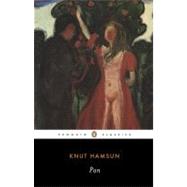
First published in 1894, Knut Hamsun's Pan is former lieutenant Thomas Glahn's retrospective narrative of his life and adventures in the Norwegian woods. A man of fascinating complexity, Glahn is in some respects a modern successor to a long line of "superfluous" men in western literature, an heir to Goethe's Werther and the protagonists of Turgenev and Dostoyevsky.But this portrait of a man rejecting the claims of bourgeois society for a Rousseauian embrace of Nature and Eros, explores the veiled mysteries of the unconscious by means of thoroughly modern techniques. Pan's quasi-musical modulations of pace and rhythm, its haunting use of leitmotifs which contract and distend time, its startling versions of myth and legend, and its ecstatic evocations of nature in its various phases and moods, all attest to the novel's Modernist innovations.Pan provides a lyrical, yet disturbing analysis of love and the recesses of the psyche. This superb new translation restores the power and virtuosity of Hamsun's original and includes an informative introduction.
^Knut Hamsun (1998). Pan: From Lieutenant Thomas Glahn's Papers (Penguin Twentieth-Century Classics), Penguin Classics. Amazon. ISBN 9780141180670 (revised Jun 2014)
Pan is a short, terse, novel about a reclusive "wild" man, Lieutenant Thomas Glahn, gifted with sexual charisma who idealizes nature and himself but is blind to his arrested development, his cruelty, and his enslavement to his own compulsive actions, which, as the novel progresses, have tragic consequences. By showing the disparity between Glahn's perception of himself, which is rather romantic and lofty, with the "other" Glahn, the uncouth, abrasive one who clashes with other people, Knut Hamsun succeeds i..